



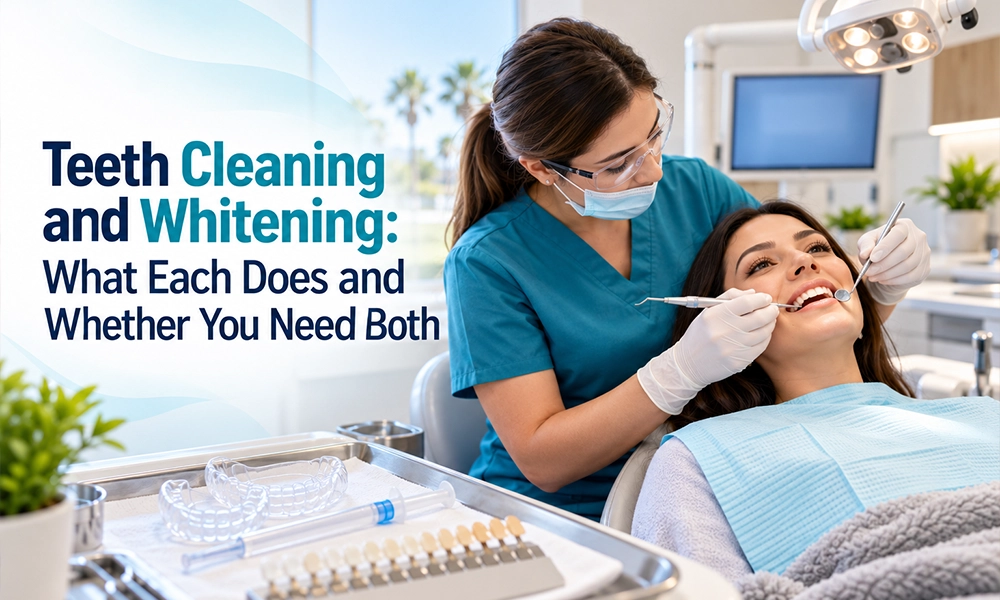
Teeth cleaning and whitening do two different jobs. A professional cleaning can remove many surface stains, which can make teeth look brighter. Whitening uses a peroxide bleach to break stains into smaller, less concentrated pieces, and it can work on stains inside the tooth as well as on its surface.
Whether you need cleaning, whitening or both depends on your oral health and the cause of the discoloration. A dental exam can help identify possible causes and any issues that need attention first, and whether you need both of them.
What Does a Professional Cleaning Do for Tooth Color?
A cleaning works on the tooth surface, where it can remove many surface stains. Whitening toothpastes can remove surface stains, but ADA-Accepted stain-removal toothpastes, which act only on the surface, don’t change the tooth’s own color. Peroxide bleaching, by contrast, can change the color of natural teeth.
Cleanings matter for more than color, too. Plaque that daily brushing and cleaning between teeth don’t remove can harden into tartar, and tartar makes teeth harder to keep clean.
At Nuevo Dental, cleanings remove plaque, tartar and surface stains, and our hygienist checks your gum health during the visit.
What Does Whitening Do That a Cleaning Can’t?
Whitening changes the color of natural teeth by bleaching stains. Its bleach, hydrogen peroxide or carbamide peroxide, breaks stains into smaller, less concentrated pieces. According to the American Dental Association, whitening can work on stains inside the tooth as well as on its surface. A cleaning removes surface stains but doesn’t bleach the tooth.
Teeth Cleaning and Whitening Side by Side
Here is how the two compare. Professional cleaning and teeth whitening both affect how your teeth look, but they work in different ways. A cleaning removes plaque, tartar, and surface stains, while whitening uses bleaching agents to change tooth colour.
| Comparison | Professional Cleaning | Whitening |
| What It Does | Our cleanings remove plaque, tartar and many surface stains | Bleaches stains with hydrogen peroxide or carbamide peroxide |
| Stains It Reaches | Surface stains | Surface stains and stains inside the tooth |
| The Main Benefit | Tartar above the gumline can leave gums swollen and prone to bleeding (gingivitis, the early stage of gum disease) | Changes how natural teeth look |
Whitening’s most common side effects are temporary tooth sensitivity and gum irritation. Before starting whitening, let our dentists at Nuevo Dental know if you have any existing tooth sensitivity.
Should You Get a Cleaning Before Whitening?
It can help. The polishing step of a professional cleaning may be done before in-office bleaching, and a dental exam beforehand, with X-rays when needed, helps find what is causing the discoloration. The exam can identify issues, such as untreated cavities or gum disease, that may need attention before whitening.
The ADA advises talking to your dentist before starting any whitening, and that includes store-bought kits. For the practical steps, see our guide to preparing for your whitening visit.
Professional Whitening or an At-Home Kit After Your Cleaning?
Store-bought bleaching products contain less peroxide than dentist products, usually cost less, and can take much longer to reach a similar result. In-office bleaching usually takes one visit, with the gums shielded first, while at-home bleaching with a dentist’s custom trays takes a few days to a few weeks. Fit matters here because gum irritation usually comes from poorly fitting trays or gel that wasn’t applied correctly.
Store-bought kits aren’t automatically the wrong choice. Some strips and toothpastes carry the voluntary ADA Seal. Dentist-supplied and dentist-applied whitening products aren’t eligible for it, so its absence doesn’t, by itself, tell you whether a professional product is safe or unsafe.
A 2018 Cochrane review of 71 trials, 26 of which compared bleaching with a placebo, found that at-home bleaching whitened teeth over 2 weeks to 6 months, but rated the evidence low to very low certainty.
A dental exam can help determine the best teeth whitening option based on your teeth and the type of discoloration. For a closer look at how the two options compare, read our comparison of professional whitening and at-home kits.
When Whitening Isn’t the Right Next Step
Whitening can’t fix every kind of discoloration. Ask your dentist whether another approach may be more suitable if any of these apply:
- You have crowns, veneers or fillings in your smile. Only natural teeth whiten, so restorations keep their color and can stand out next to whitened teeth.
- Your teeth have a gray tone. Yellow teeth will probably bleach well, but gray-toned teeth may not bleach at all, and brown teeth may respond less.
- The discoloration came from medication or a tooth injury. It may not respond to whitening. Tetracycline stains may lighten but can require three to four months of nightly treatment on average.
Book a Teeth Cleaning or Whitening Appointment
A dental exam can help you understand whether you need a cleaning, whitening, or both.
At Nuevo Dental, whitening starts with a consultation and dental health assessment, and the options include in-office whitening and take-home kits made for your teeth, along with professional teeth cleaning.
Our office at 6314 Laurel Canyon Blvd in North Hollywood is open Monday to Friday, 9 a.m. to 5 p.m., and on Saturdays when booked ahead. Call (818) 210-0515 or contact our office to schedule a visit.